
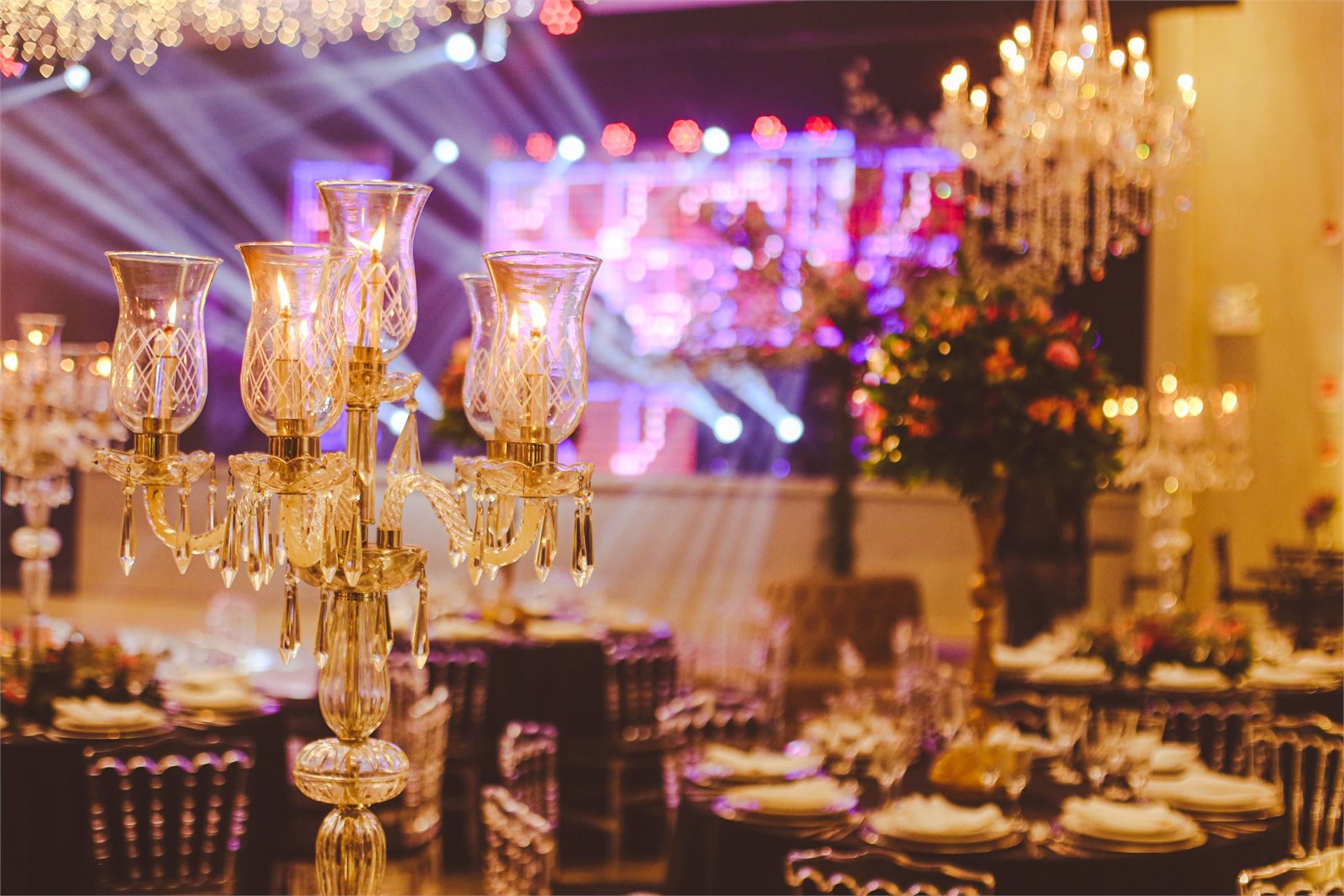
Events
Different Rooms. The Same Team Behind Them.
Corporate galas, conferences, themed events and intimate soirées. Different rooms, a different kind of pressure, and the same structured team standing behind all of them.
A wedding has a family at its centre. Everything else has an audience.
That single difference changes how a day has to be run. At a wedding the schedule bends around the people inside it — the muhurat holds and the rest gives way. At a gala or a conference nothing gives way. Doors open at the printed time, the stage runs to an order other people have already been shown, and the room often has to become something else between one part of the evening and the next.
So the pressure moves. Less of it sits with a family and more of it sits with the clock, with a brand, and with whoever in the room signed the budget. What does not move is the requirement underneath: a defined team, briefed before it arrives, with one person accountable for all of it.
What We Run
Four Kinds of Room.
These are the occasions the company works to beyond weddings. They ask for the same eight roles in different proportions — which is the whole reason one team model covers all four.
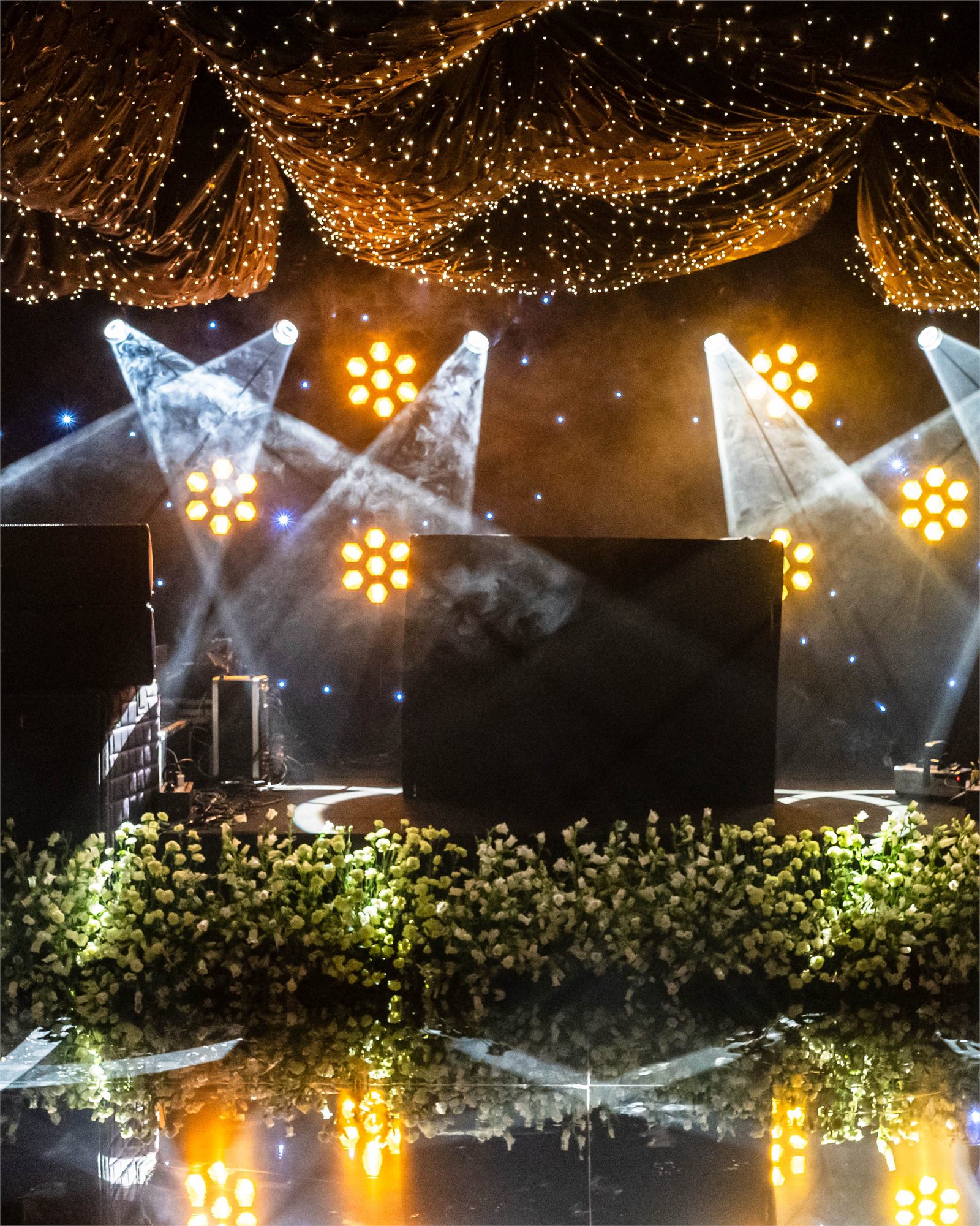
Corporate Galas
The company is the host, and it is being judged.
A gala is an organisation standing in front of its own people, its clients or its industry, and every part of the evening reads as a statement about it. Guests arrive inside a narrow window and expect to be received rather than processed. The stage runs to an order that cannot slip, and the room often has to become something else between one part of the night and the next.
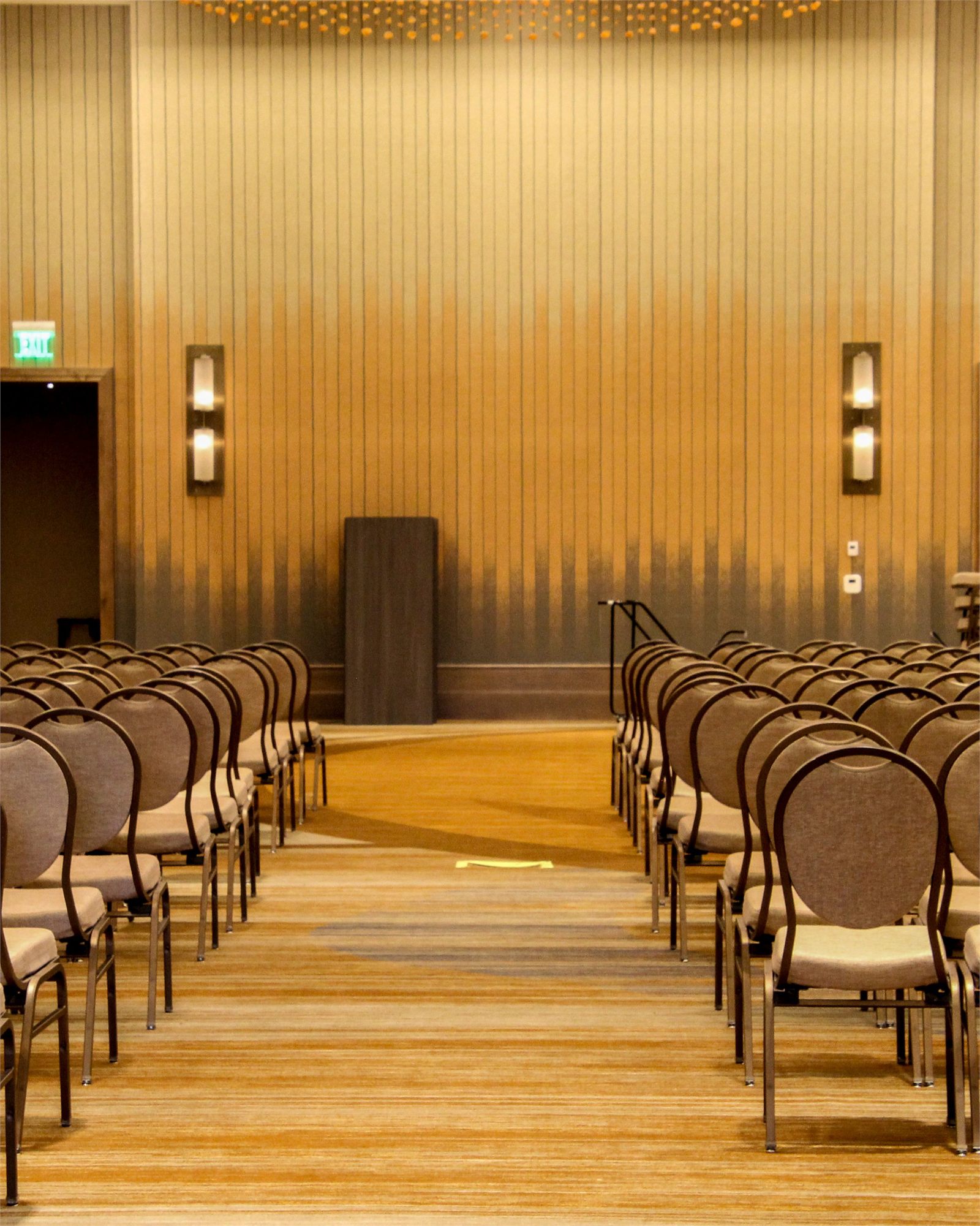
Conferences
Doors at nine. Everything follows from that.
A conference is a schedule with people inside it. Registration has to clear before the first session rather than during it. Speakers have to be where they are needed instead of where they wandered. Breaks have to genuinely break and genuinely reassemble, and the hall has to be reset while the delegates are out of it. Sequential, unglamorous work — which is precisely what a defined team with a written brief is for.

Themed Events
The idea has to survive contact with the venue.
A theme is easy to agree in a meeting and hard to hold on the floor. Somebody has to carry the concept through the entrance, the seating, the service and the stage, rather than let it survive only in the décor. We work alongside whoever owns the look — the décor company, the planner, the organiser — and take the parts of it that involve moving people.
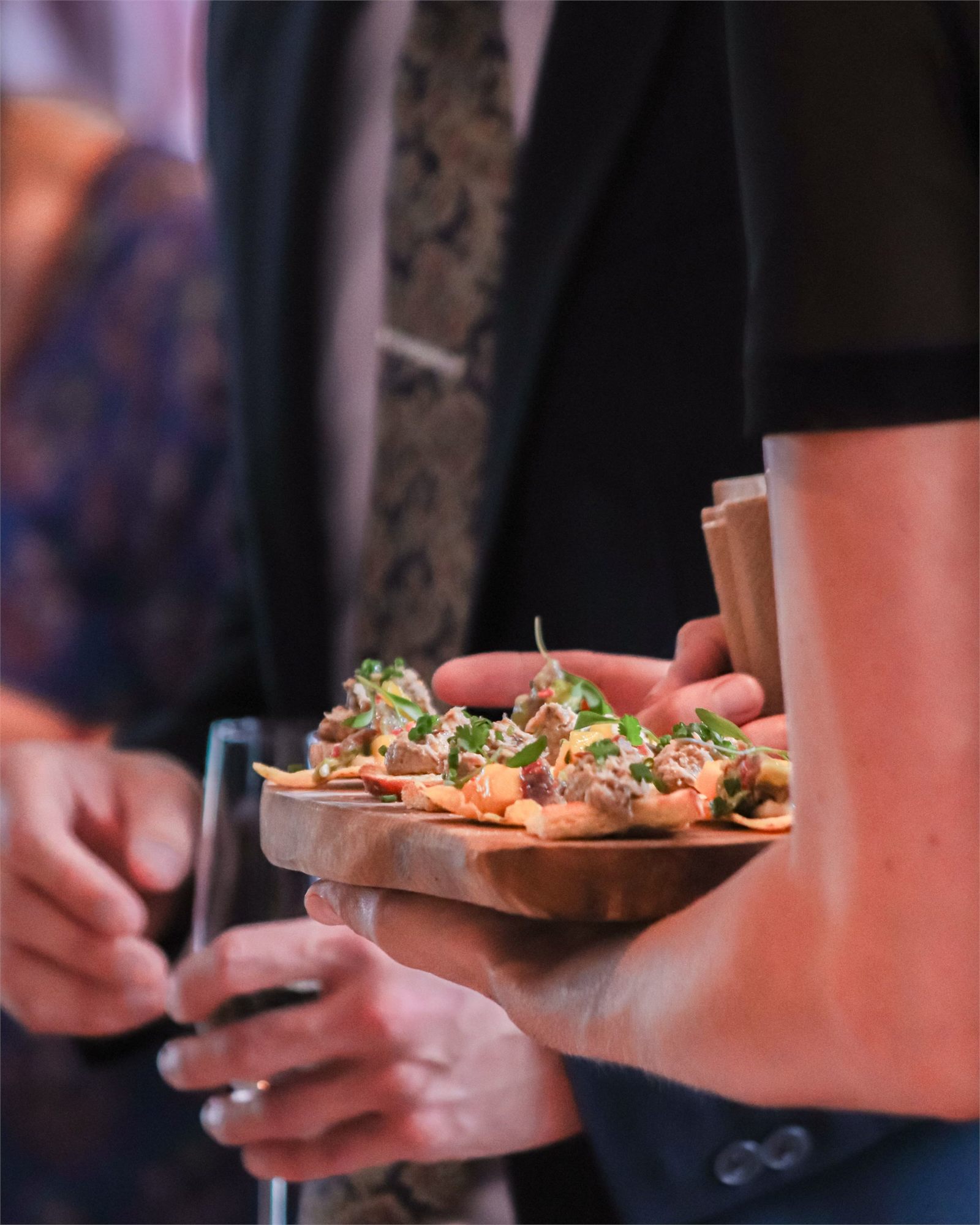
Social Events & Intimate Soirées
Small enough that every gap shows.
At a small event there is nowhere for a mistake to hide. A drink that arrives late, a guest nobody greets, a course served while someone is speaking — at this scale each one of those is the evening. Headcounts come down and attention goes up, which is why a smaller event is never simply a smaller version of a large one.
Scroll sideways for all four.
The Difference
What Changes. What Doesn’t.
A corporate floor and a wedding lawn are not the same job. They are, however, the same team — deployed differently, briefed differently, and held to the same small number of things that never move.
What changes with the room
Who the guest is
At a wedding they are family. Here they are employees, delegates, customers or invited guests of a business, and how they should be received follows from that rather than from tradition.
What the clock is made of
A wedding runs to a muhurat and the rest of the day gives way to it. An event runs to a published agenda that other people have already been shown, which makes running late a public fact rather than a private one.
Whose name is on the floor
Much of this work reaches us through décor companies, planners and organisers. When it does, the crew on the ground answers to their brand and is briefed to protect it, not to be noticed inside it.
How much of it is a performance
A stage, a running order and an audience change the job. The room is being watched for the whole of the evening, so the work of running it has to disappear completely.
What holds, whatever the room
The same eight roles
RSVP, logistics, hospitality, runners, food and beverage, shadows, an ongoing event manager and a senior manager above them. What moves between a wedding and a conference is how many of each, not which ones exist.
A brief, not an instruction to help out
Everybody on the ground knows what they own and who they hand it to before the day begins. Nobody is deployed and then asked to work out where they are useful.
One senior person accountable
There is a single number to call for the length of the event, and one person holding the departments to their own briefs — the same on a conference floor as at a wedding.
Guests reached, not counted
Wherever there is a guest list, it is worked through by conversation rather than estimated from the number of invitations that went out.
Before We Start
What Makes a First Conversation Useful.
You do not need a finished plan to talk to us. You do need a few things that decide the shape of the answer — and one of them is almost always the most useful sentence in the meeting.
The date, and the venue or the shortlist
Where it happens decides how much of the work is travel and accommodation rather than floor management. A shortlist is enough to start with.
The running order, even a rough one
The shape of the schedule is what tells us the shape of the crew. A half-finished agenda is far more useful than a finished guest count.
Who your guests are, and who owns the list
You, your client, or an agency between the two. It decides where guest contact begins and who we should be speaking to about it.
Whose brand we are working under
Yours, your client’s, or ours. Worth saying early — it changes how the team is briefed, how it is dressed and how it introduces itself.
What went wrong the last time
The single most useful thing you can tell us. Most organisers are still carrying one failure from a previous event, and it is usually the thing worth designing around.
Our Management Is Beyond Your Imagination
Tell Us What You Are Running.
A date, a venue and a rough running order are enough to begin. We will tell you what the event actually takes to hold, and what we would put on the floor to hold it.